Buying property is one of the biggest financial decisions a person can make. Whether it’s a subdivision lot or a condominium unit, buyers want assurance that the project they’re investing in is legitimate, safe, and protected by law. This is where the License to Sell (LTS) becomes crucial.
What Is a License to Sell?
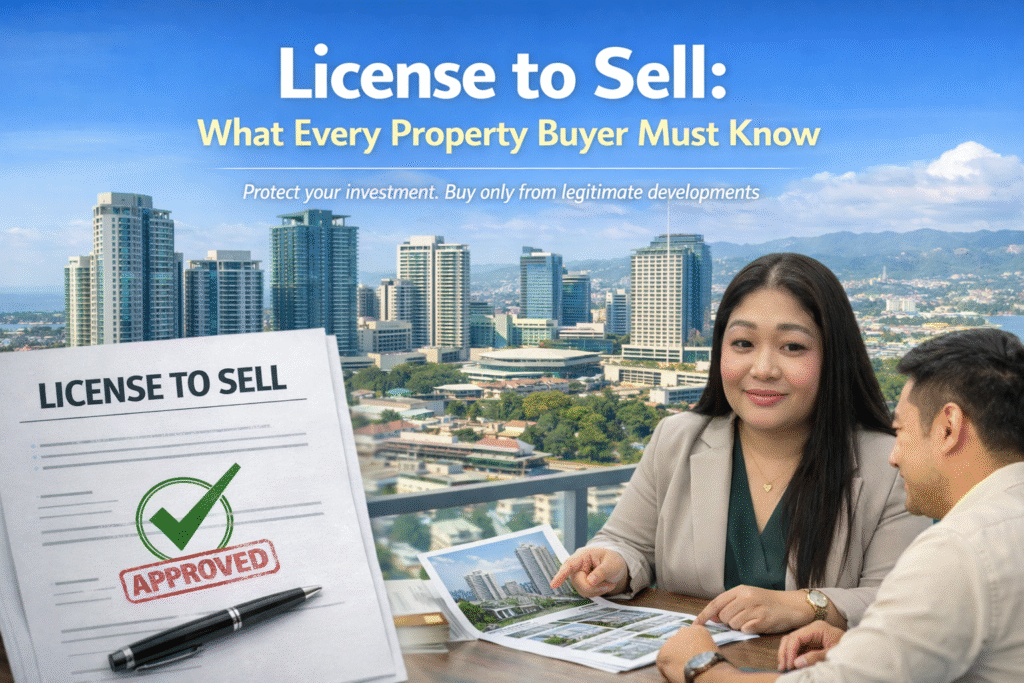
A License to Sell (LTS) is an official permit that authorizes a real estate developer to market and sell subdivision lots or condominium units, especially for projects that are still under development.
In the Philippines, this license is issued by the Department of Human Settlements and Urban Development (DHSUD). Without an LTS, a developer is not legally allowed to sell any property units—no matter how attractive or advanced the project may appear.
Condovision Living Area
Lucima Arthaland 3 BR Condo
Why Do Developers Need a License to Sell?
A License to Sell serves as proof that a real estate project has met essential government requirements. Before issuing an LTS, the DHSUD carefully reviews whether the developer has:
Clear and valid land ownership
Approved development plans
Necessary government permits
The financial and technical capacity to complete the project
In short, the LTS confirms that a project is lawful, compliant, and credible. Selling properties without it is considered illegal and exposes developers to penalties and legal action.
How Does a License to Sell Protect Buyers?
For property buyers, the License to Sell acts as a strong layer of protection. It ensures that:
The project is registered and monitored by the government
The developer is legally accountable for completing the project
Buyers are protected from fraud, scams, and ghost projects
Complaints and disputes can be properly addressed through legal channels
Buyer Protection
Before making any reservation or down payment, buyers are strongly advised to verify that the project has a valid LTS. This simple step can prevent serious financial and legal problems in the future.
What Law Governs the License to Sell?
The primary law governing the License to Sell in the Philippines is Presidential Decree No. 957, also known as the Subdivision and Condominium Buyers’ Protective Decree.
This law was created to:
Regulate the sale of subdivision lots and condominium units
Require developers to secure a License to Sell before offering units to the public
Protect buyers from unfair, deceptive, and fraudulent real estate practices
All rules and regulations under this law are now implemented and enforced by the DHSUD.
Why the License to Sell Matters
A License to Sell benefits both buyers and developers. For buyers, it provides peace of mind and legal protection. For developers, it builds trust, credibility, and long-term confidence in the market.
At the end of the day, a valid License to Sell is more than just a document—it’s a guarantee that a real estate project is lawful, transparent, and worth investing in.